
Replaying the São Paulo Grand Prix floods: a 3D digital twin of Interlagos under water
In November 2024, torrential rain flooded the Interlagos Formula 1 circuit during the São Paulo Grand Prix. We rebuilt the venue as a 3D digital climate twin and replayed the flooding: the same simulation pipeline we deploy for UAE infrastructure, applied to a site the whole world watched.
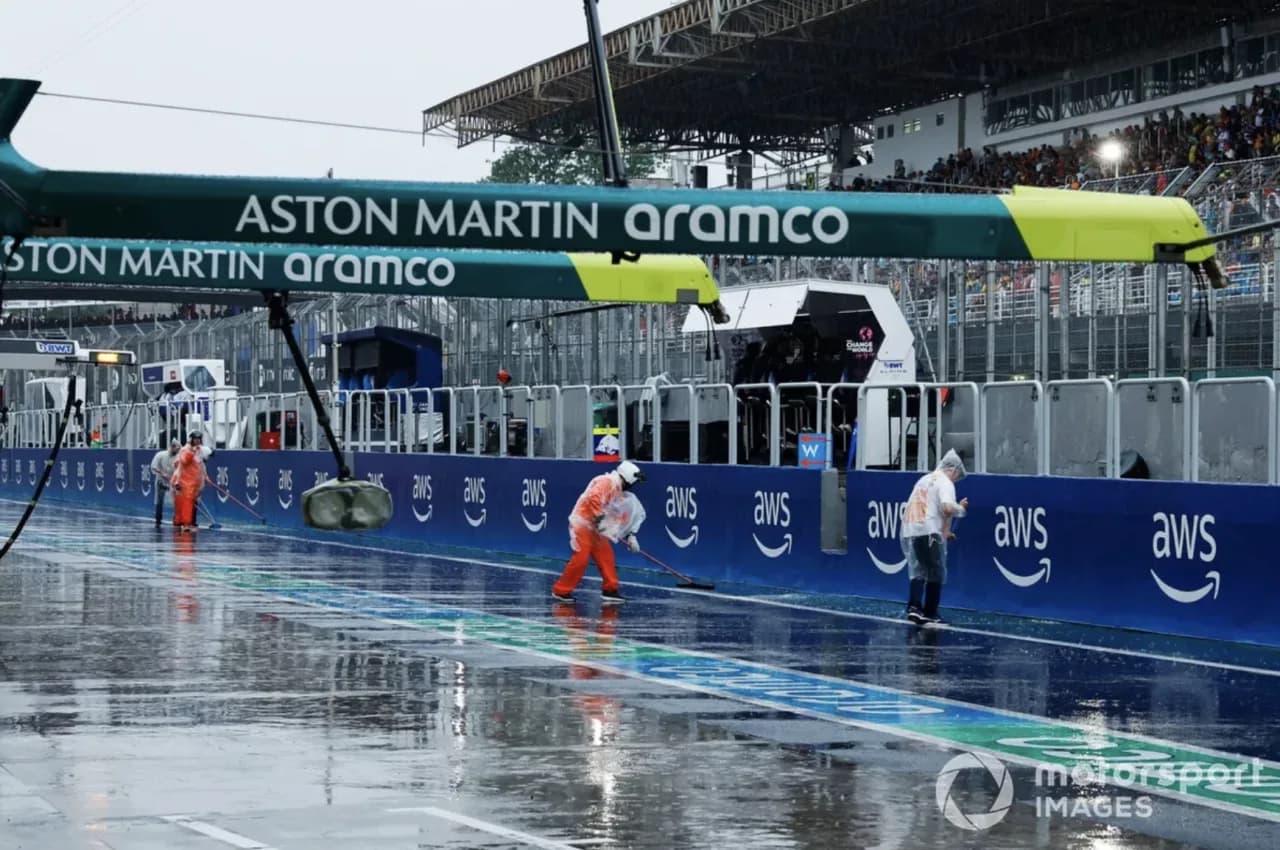
In November 2024, the Formula 1 São Paulo Grand Prix at the Interlagos circuit was disrupted by torrential rain. Standing water spread across the track and pit lane, marshals were sent out to sweep it away by hand, and sessions were delayed while the venue battled conditions it was never designed to drain. The footage travelled the world, but for us, it was also a perfectly documented test case.
We rebuilt the Interlagos circuit and its surroundings as a 3D digital climate twin: the same kind of model we produce for UAE infrastructure. Terrain, elevation, track geometry and the built environment were assembled into a single base, then driven by a hydrological model that reproduces how rainfall accumulates, flows and pools across the site.
The result is the interactive demonstration you can explore on our homepage: an orbiting view of the circuit with a live flood overlay, showing where water gathers first, how it spreads, and which areas stay exposed as the rain intensifies. Because Interlagos is a globally recognisable venue with abundant public footage, anyone can hold the simulation up against what actually happened on the ground.
Why a racetrack? Because it makes the method legible. A circuit is a closed, well-mapped environment with an obvious drainage challenge, the ideal canvas to show, at a glance, what a Gistin digital twin does: turn topography and weather into an operational picture of risk before the next event, not a damage report after it.
São Paulo is a demonstration, but the pipeline behind it is the one we deploy for real territories. From a flooded racetrack to a flood-exposed district, the question is the same (where does the water go, and who is in its path), and so is our answer.
Continue reading
Industry event
Gistin at the Abu Dhabi Infrastructure Summit 2026: meeting the UAE's infrastructure ecosystem
In May 2026, the Gistin team attended the Abu Dhabi Infrastructure Summit at ADNEC (a key regional event on infrastructure, urban innovation and future-ready technologies), meeting stakeholders shaping the next generation of resilient UAE infrastructure.
Economic event
Gistin at Make It In The Emirates 2026: a strategic presence at the heart of the UAE's industrial ambition
Gistin took part in the 2026 edition of the Make It In The Emirates Exhibition in Abu Dhabi, one of the most prominent gatherings for industry and innovation players looking to establish or expand their presence in the Gulf region.